Home › Common Problems › Foundation Wall Water Intrusion
Foundation Wall Water Intrusion
in San Antonio, TX
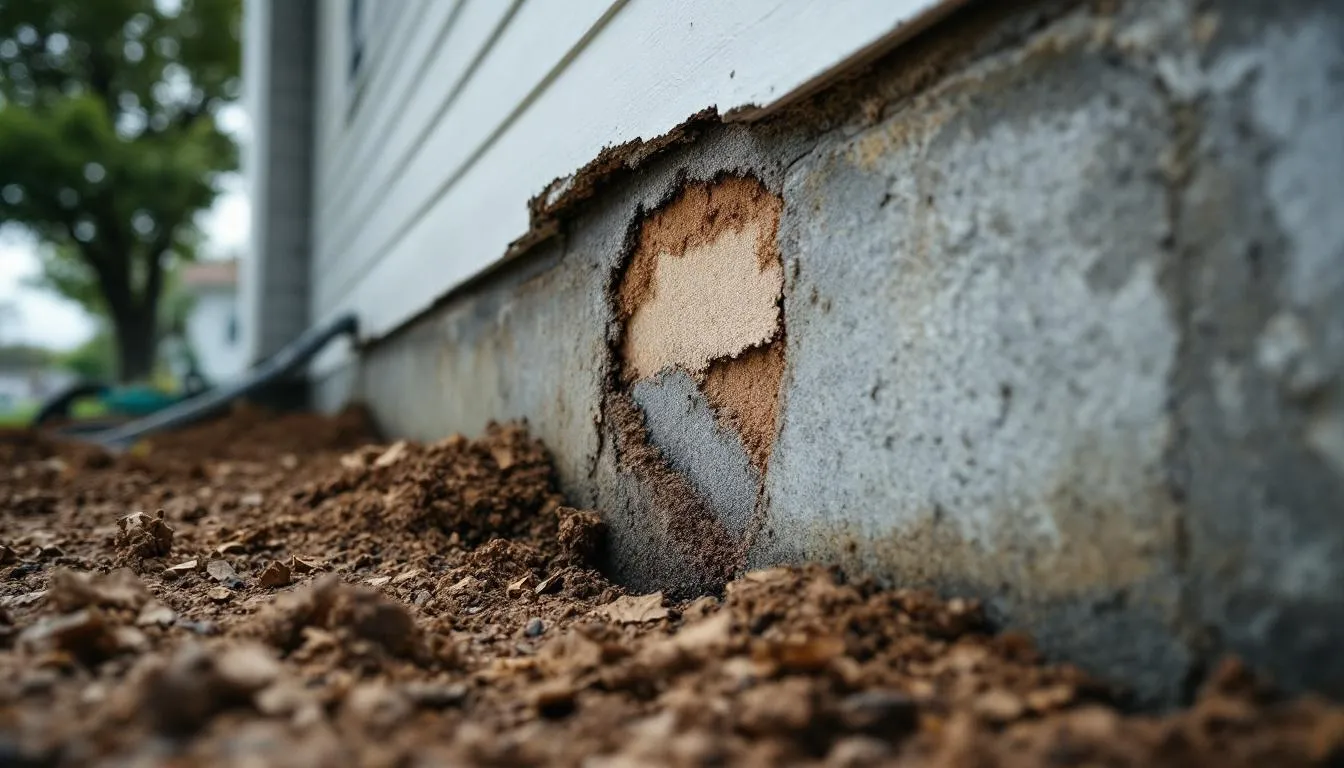
Water intrusion through foundation walls is a recurring concern for San Antonio homeowners, especially those in lower-lying areas near Leon Creek, Salado Creek, or the many natural drainage corridors that cut through the city's older neighborhoods. When heavy rainfall events — the kind that produce flash flood watches across Bexar County multiple times each year — saturate the soil around the foundation, hydrostatic pressure forces moisture through any available crack, joint, or porous concrete surface. Once water enters the crawl space, interior walls, or utility areas, mold can establish within 48 to 72 hours in San Antonio's warm, humid conditions.
Telltale Signs
Warning Signs to Watch For
- Wet spots, efflorescence, or active weeping visible on interior foundation wall surfaces after rain
- Musty or mildew odor concentrated in lower areas of the home or crawl space
- Visible mold growth on wall framing, insulation, or stored materials near the foundation
- Peeling paint or bubbling drywall at the base of interior walls adjacent to the foundation
- Standing water on the crawl space floor or slab after significant rainfall events
- Rust staining on concrete surfaces indicating rebar corrosion from chronic moisture
Root Causes
What Causes Foundation Wall Water Intrusion?
Hydrostatic Pressure Infiltration
San Antonio's clay soils become nearly impermeable when saturated, preventing drainage and allowing water to build pressure against the foundation wall exterior. This hydrostatic head forces water through hairline cracks, cold joints between the footing and stem wall, and porous concrete that was never waterproofed at original construction.
The Fix
Interior Drainage System & Sump Pump Installation
A perimeter drainage channel is installed at the base of the interior foundation wall to intercept infiltrating water and direct it to a sump basin, where a pump discharges it away from the structure. This system manages hydrostatic water reliably without requiring full exterior excavation.
Failed or Absent Exterior Waterproofing
Many San Antonio homes built before the 1990s received only a basic bituminous damp-proof coating on the foundation exterior — a coating that degrades and cracks within 10 to 15 years. Once the coating fails, the porous concrete foundation wall is directly exposed to the saturated soil environment, and moisture wicks inward through capillary action during every rain event.
The Fix
Exterior Foundation Waterproof Membrane Installation
The soil is excavated at the affected foundation section, the deteriorated coating is removed, and a modern rubberized asphalt or HDPE waterproof membrane is applied to the full wall surface from footing to grade. A drainage board and fresh gravel backfill are added to promote water movement away from the wall.
Self-Diagnosis
Which Cause Applies to You?
Check the signs you're observing to narrow down the likely root cause before your inspection.
| What You're Seeing | Hydrostatic Pressure Infiltration | Failed or Absent Exterior Waterproofing |
|---|---|---|
| Water intrudes through base of wall at footing joint only | ||
| Moisture appears as broad, diffuse seeping across entire wall face | ||
| Intrusion occurs only during or immediately after major rain events | ||
| Efflorescence present on old, unpainted concrete wall surface | ||
| Chronic low-level moisture present even without recent rainfall | ||
| Water collects in a line along the wall base rather than dripping from above |
Free Inspection
Get a Diagnosis in San Antonio
An on-site inspection is the only way to confirm which cause applies to your property. Free, no obligation.
(210) 733-7447Free on-site inspection
Written estimate before work starts
Serving San Antonio & surrounding areas
Other Problems
Also Helpful