Home › Common Problems › Slab Foundation Cracks
Slab Foundation Cracks
in San Antonio, TX
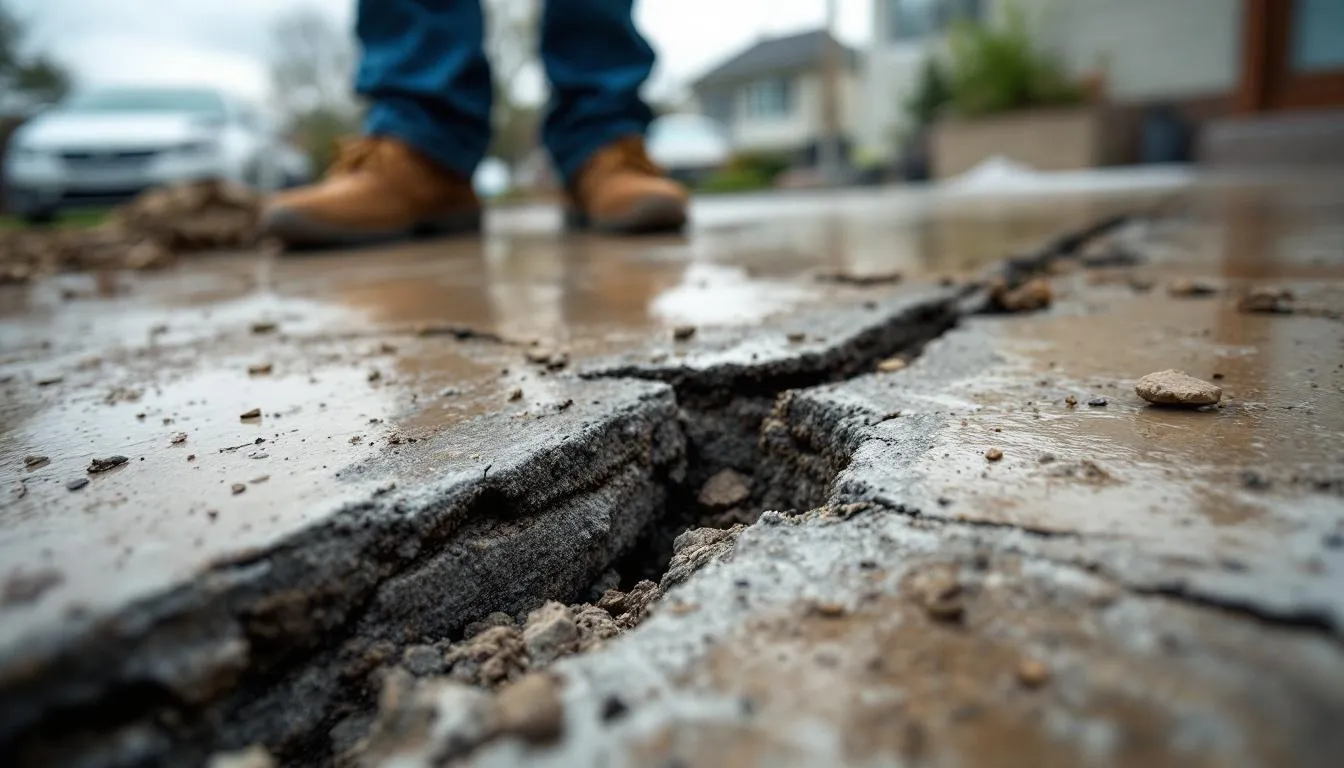
Slab cracks are one of the most frequently reported foundation concerns in San Antonio, where the vast majority of homes built after the 1960s use post-tensioned or conventionally reinforced monolithic slabs poured directly on reactive clay soils. The extreme temperature swings and drought-flood cycles of the Texas Hill Country edge climate place enormous stress on concrete slabs year-round. Ignored cracks allow moisture intrusion, radon entry, and progressive structural weakening that compounds repair complexity over time.
Telltale Signs
Warning Signs to Watch For
- Visible cracks running across the interior floor slab, ranging from hairline to quarter-inch wide
- Cracks that travel diagonally or in a pattern following the slab's tension cables
- Moisture or efflorescence (white mineral deposits) seeping up through crack lines
- Floor tiles cracking or popping loose in a linear pattern
- A noticeable step or vertical displacement where two sections of the slab meet
- Musty odor near the cracked area suggesting water intrusion from below
Root Causes
What Causes Slab Foundation Cracks?
Post-Tension Cable Failure
A large share of San Antonio homes built from the 1980s onward use post-tensioned slabs where steel cables are stressed after the concrete cures to resist expansive soil forces. When a cable corrodes or snaps — accelerated by San Antonio's alkaline soils and occasional slab moisture intrusion — the concrete loses tension in that zone and cracks under soil pressure.
The Fix
Post-Tension Cable Repair & Slab Stabilization
A structural technician accesses and re-anchors or replaces the failed cable segment, then the crack is epoxy-injected to restore monolithic integrity. Addressing the cable ensures the slab can again resist the lateral soil forces it was designed to handle.
Differential Soil Movement
San Antonio's clay soils expand under the slab where plumbing leaks or surface water collects, while simultaneously shrinking in drier perimeter zones during summer. This opposing movement bends the slab beyond its tensile strength, producing through-cracks that often run parallel to the longest slab dimension.
The Fix
Pressed Pier Underpinning & Crack Injection
Piers are installed to stabilize and partially re-level the affected slab section, followed by polyurethane or epoxy crack injection to seal the opening against future moisture intrusion. Stabilizing the slab position prevents the crack from widening further.
Self-Diagnosis
Which Cause Applies to You?
Check the signs you're observing to narrow down the likely root cause before your inspection.
| What You're Seeing | Post-Tension Cable Failure | Differential Soil Movement |
|---|---|---|
| Crack runs straight across slab with sudden pop sound reported | ||
| Crack widens noticeably during summer dry months | ||
| Vertical displacement (step) along the crack line | ||
| Water weeps upward through crack after heavy rain | ||
| Cable anchor pocket visible and displaced at slab edge |
Free Inspection
Get a Diagnosis in San Antonio
An on-site inspection is the only way to confirm which cause applies to your property. Free, no obligation.
(210) 733-7447Free on-site inspection
Written estimate before work starts
Serving San Antonio & surrounding areas
Other Problems
Also Helpful