Home › Common Problems › Foundation Drainage Problems
Foundation Drainage Problems
in San Antonio, TX
Water management around the foundation is the single most important preventive factor for San Antonio homeowners, yet drainage is frequently neglected or poorly designed. The Balcones Escarpment geography that defines much of San Antonio means many properties sit on slopes or in natural drainageways where water concentrates against the foundation during the flash-flood-producing thunderstorms that sweep through the city from spring through fall. Chronic soil saturation softens and erodes bearing material, accelerates clay expansion cycles, and introduces hydrostatic pressure that cracks and undermines slabs and stem walls.
Telltale Signs
Warning Signs to Watch For
- Standing water remains pooled against the foundation for more than 24 hours after rain
- Soil or mulch beds slope toward the house rather than away from it
- Downspouts discharge directly at the foundation or into saturated soil with no extension
- Efflorescence or white calcium deposits visible on the foundation stem wall exterior
- Basement or interior floor showing moisture intrusion near the perimeter walls
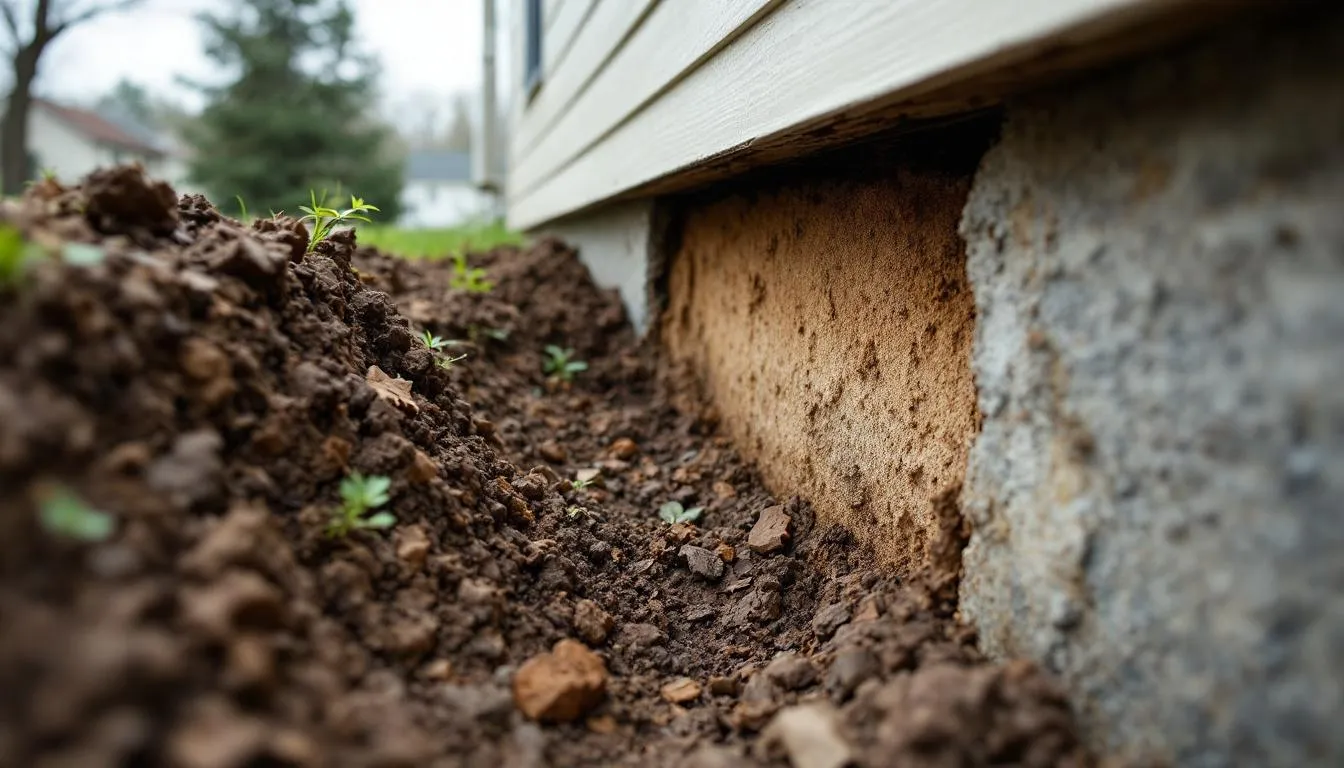
- Erosion channels or bare soil trenches running alongside the foundation after storms
Root Causes
What Causes Foundation Drainage Problems?
Negative Yard Grading
Over time, soil settles and compacts adjacent to the foundation in San Antonio's clay-heavy lots, reversing the positive slope needed to carry water away from the structure. During the intense summer thunderstorms common to Bexar County, this bowl effect channels hundreds of gallons directly against the foundation perimeter in a matter of minutes.
The Fix
Perimeter Regrading & Soil Build-Up
Topsoil or compacted fill is added around the foundation perimeter and graded to achieve the minimum recommended slope of six inches drop over ten horizontal feet. Proper positive grade intercepts storm water before it ever reaches the foundation wall.
Inadequate or Missing Gutters & Downspouts
San Antonio receives an average of 31 inches of rain annually, often in concentrated bursts, and a home without functioning gutters allows roof runoff to freefall directly onto the soil next to the foundation. This concentrated impact erodes the perimeter soil, removes the protective clay cap, and introduces large volumes of water into the bearing zone beneath the slab edge.
The Fix
Gutter System Installation & Downspout Extension
Full-perimeter gutters are installed or repaired, and downspouts are extended with underground drainage pipes or surface splash blocks that discharge water at least six feet from the foundation. This intercepts the primary water source before it can contact the foundation soil.
Self-Diagnosis
Which Cause Applies to You?
Check the signs you're observing to narrow down the likely root cause before your inspection.
| What You're Seeing | Negative Yard Grading | Inadequate or Missing Gutters & Downspouts |
|---|---|---|
| Water pools specifically beneath downspout discharge point | ||
| Pooling occurs uniformly around multiple sides of the foundation | ||
| Erosion ruts visible along foundation edge after every storm | ||
| Grading visibly slopes toward the home across the full yard | ||
| Foundation staining concentrated below roof drip line with no gutters |
Free Inspection
Get a Diagnosis in San Antonio
An on-site inspection is the only way to confirm which cause applies to your property. Free, no obligation.
(210) 733-7447Free on-site inspection
Written estimate before work starts
Serving San Antonio & surrounding areas
Other Problems
Also Helpful