Home › Common Problems › Foundation Upheaval
Foundation Upheaval
in San Antonio, TX
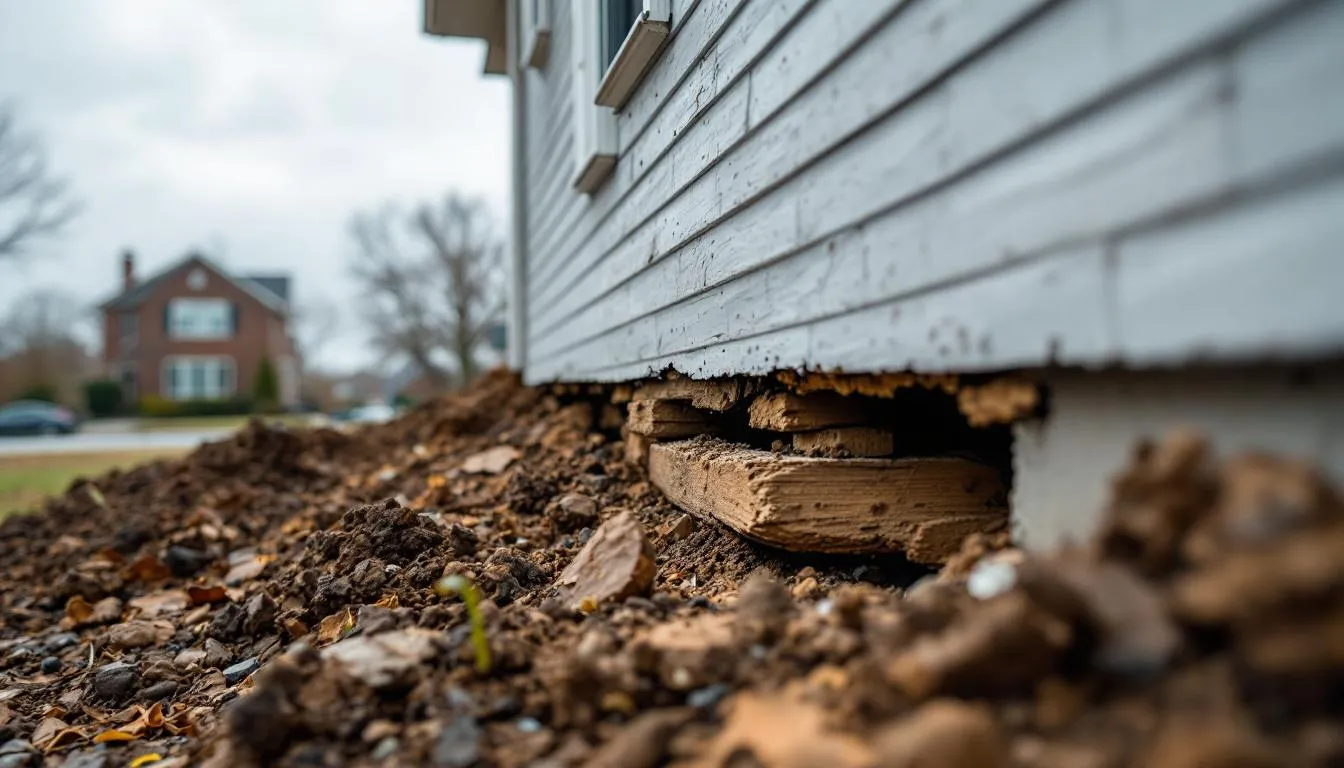
While most homeowners worry about their foundation sinking, upheaval — where the slab is pushed upward from below — is actually a frequent and disorienting problem in San Antonio. The same highly plastic Taylor clay soils that compress during droughts expand aggressively when saturated, and the under-slab zone is particularly vulnerable to moisture accumulation from plumbing leaks, poor drainage, or even heavy landscape irrigation. Upheaval tends to affect the interior of the slab more than the perimeter and is often misdiagnosed as settlement, leading to incorrect and ineffective repairs.
Telltale Signs
Warning Signs to Watch For
- Floors that bow or hump upward in the center of a room rather than sloping toward a wall
- Doors in the interior of the home — especially hallway doors — that bind at the top of the frame
- Cracks in drywall that are wider at the bottom than at the top
- Tile floors that tent or pop upward along grout lines in bathrooms or kitchens
- Noticeable ridge or raised seam running across the floor slab
Root Causes
What Causes Foundation Upheaval?
Under-Slab Plumbing Leak
San Antonio's aging cast-iron drain lines — prevalent in homes built before the 1980s — corrode and crack beneath the slab, releasing water directly into the reactive clay soil below. Sustained moisture causes the clay to swell volumetrically, pushing the slab upward from the interior where drainage lines concentrate.
The Fix
Plumbing Leak Detection & Pipe Rerouting
A hydrostatic plumbing test or electronic leak detection pinpoints the failing line, which is then either tunneled and repaired or rerouted above the slab using updated PVC materials. Eliminating the moisture source is the only sustainable solution — no structural repair holds if the soil continues to be saturated.
Excessive Landscape Irrigation
Many San Antonio homeowners apply heavy irrigation against the home's foundation perimeter during drought — a well-intentioned but potentially damaging practice if water migrates under the slab center. Sprinkler systems that discharge near the house direct water into the clay at a rate that exceeds evaporation, leading to uneven swelling that lifts interior slab sections.
The Fix
Irrigation Adjustment & Moisture Barrier Installation
Sprinkler heads are repositioned to discharge water away from the foundation zone, and a root barrier or subsurface moisture membrane is installed at the slab perimeter to prevent water migration beneath the interior slab. Consistent moisture management is the long-term key to preventing recurrence.
Tree Root Moisture Extraction & Rehydration
Large live oaks and cedar elms — iconic trees throughout San Antonio's older neighborhoods — extract enormous volumes of soil moisture through their root systems, causing nearby clay to shrink. When the tree dies, is removed, or enters dormancy, the soil rehydrates and swells back, but often unevenly, producing localized slab upheaval.
The Fix
Root Barrier Installation & Controlled Soil Drying
A root barrier is installed between the former root zone and the slab perimeter to prevent future moisture interference, and controlled sub-slab ventilation may be used to gradually normalize soil moisture content. Patience is required — soil rehydration can be a slow process spanning one to two growing seasons.
Self-Diagnosis
Which Cause Applies to You?
Check the signs you're observing to narrow down the likely root cause before your inspection.
| What You're Seeing | Under-Slab Plumbing Leak | Excessive Landscape Irrigation | Tree Root Moisture Extraction & Rehydration |
|---|---|---|---|
| Floor hump located directly above known water line path | |||
| Upheaval developed shortly after removing a large tree | |||
| Swelling worsens during or after prolonged irrigation season | |||
| Water detected by plumber under slab via pressure test | |||
| Tile tenting concentrated near bathrooms or kitchen | |||
| Seasonal lifting correlated with spring rains and irrigation start-up |
Free Inspection
Get a Diagnosis in San Antonio
An on-site inspection is the only way to confirm which cause applies to your property. Free, no obligation.
(210) 733-7447Free on-site inspection
Written estimate before work starts
Serving San Antonio & surrounding areas
Other Problems
Also Helpful